Let’s be completely honest here: the bland, boiled food we’re forced to eat in the name of weight loss is truly boring. Seeing the same tasteless rice cakes or boiled vegetables day after day can make anyone lose interest—and even drive them to order a pizza in frustration. But finding the right snack can change everything, which is why comparing roasted makhana vs boiled corn calories is the perfect place to start your fat loss journey.
Just last month, a client of mine named Neha called me in a state of distress. She said, “Sir, I manage to stick to my diet reasonably well in the morning, but the moment it hits 5 PM, I get such intense cravings for samosas and chips that my entire diet plan goes out the window.”
And believe me, this isn’t just Neha’s story. For 90% of people, their diet falls apart between 4 PM and 6 PM. When hunger pangs strike during that time, the brain craves something enjoyable. We want something crunchy, something substantial enough to feel filling, and—most importantly—something that doesn’t carry the fear of weight gain. I always say: don’t fight hunger; outsmart it.
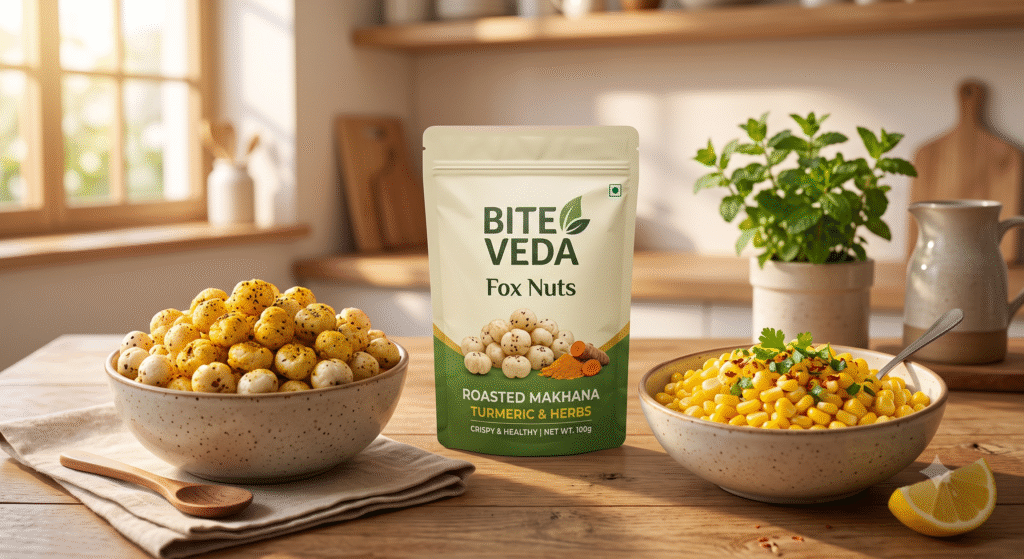
That is why today we will discuss two of the most popular evening snacks: roasted makhana (fox nuts) and boiled corn (sweet corn). Both sell well on the promise of being healthy, but when you are counting every single calorie, which one is the best choice for you? Let’s cut through the marketing hype and get straight to the facts.
Fox Nuts and Corn: The Real Truth About Weight Loss:
Losing weight isn’t just about eating less. The real trick lies in eating foods that keep you feeling full for longer, so you don’t get hungry again at midnight.
Makhana (also known as fox nuts or lotus seeds) has been used in our homes for years. They look and taste like popcorn, but their benefits are far greater. They are very light in weight and swell in the stomach. It fills you up quickly. When I first started eating a large bowl of roasted makhana instead of evening chips, I was amazed at how long it kept hunger at bay. You know that habit we have of constantly munching on something while watching TV? Makhana satisfies that urge without adding extra calories.
On the other hand, there is boiled corn (sweet corn). It is sweet and juicy, and eating it gives you the feeling of having consumed something substantial—not just empty air.
However, the two function differently. Makhana is a protein-rich, low-carbohydrate snack, whereas corn is a high-carbohydrate, fiber-rich grain. If your sole objective is burning fat, this distinction matters a great deal.
Makhana wins when it comes to volume. You can eat a large bowlful without worrying about calories. Corn takes the lead in terms of taste and satisfaction, but you need to exercise some control over your portion size.choosing the wrong one here will stall your progress before you even realize it.
Calories in 1 cup boiled corn vs makhana
When you are on a weight-loss journey, calorie counts become crucial. Let’s compare the two based on a one-cup serving:
If you eat one cup of roasted makhana (fox nuts)—weighing approximately 15–20 grams—you consume only 60 to 70 calories. In contrast, one cup of boiled corn (weighing about 145 grams) contains roughly 130 to 150 calories.

Just think about it: for the same calorie budget used for a single cup of corn, you could enjoy two full cups of makhana! For those who find satisfaction in eating larger portions, makhana is a real boon.
If we consider a 100-gram portion, dried makhana is so lightweight that 100 grams of it would look as voluminous as a large packet of chips—an amount no one could finish in a single sitting. 100 grams of roasted makhana contains approximately 350–390 calories (depending on the amount of ghee or oil used), whereas 100 grams of corn contains about 96 calories. However, because corn is denser, a 100-gram serving appears quite small.
In terms of nutrition, one cup of makhana (fox nuts) contains approximately 12 grams of carbs and 2.5 grams of protein. In contrast, one cup of corn contains 31 grams of carbs, 5 grams of protein, and 3.6 grams of fiber. While corn may be higher in protein and fiber, it also contains more than double the amount of carbohydrates and natural sugar.
Macronutrient Breakdown
To truly see which fits your lifestyle, we need to look at what those calories are made of:
| Nutrient (Per 1 Cup Serving) | Roasted Makhana (Plain) | Boiled Sweet Corn |
| Calories | ~65 kcal | ~140 kcal |
| Carbohydrates | 12g | 31g |
| Protein | 2.5g | 5g |
| Fat | 0.1g | 2g |
| Fiber | 1.5g | 3.6g |
While corn has more protein per cup, it also comes with more than double the carbohydrates and a higher sugar content. Makhana keeps the carbs low while offering a surprisingly decent amount of plant-based protein for something so incredibly light.
The Connection Between Blood Sugar and Hunger (Glycemic Index):
Calories are only half the story; the rest is determined by our body’s hormones (especially insulin). How quickly a food raises your blood sugar determines when you will feel hungry again.
Makhana (Slow-release effect): Makhana has a very low glycemic index (GI)—below 50. It digests slowly, preventing sudden spikes in blood sugar levels. You won’t experience a sudden burst of energy followed by a crash or fatigue. Makhana is an excellent choice for individuals with insulin resistance, PCOS, or Type-2 diabetes.

Boiled Corn (Sudden Energy Spike): Sweet corn has a relatively high Glycemic Index (55 to 60). Being a starchy vegetable that contains natural sugars, it is absorbed by the body somewhat quickly. While its fiber content does help moderate the impact on blood sugar, consuming a large amount at once can cause a spike, leading to intense cravings for sweets or other foods shortly thereafter.
Let’s also dispel a common myth here—many people believe that eating corn at night leads to weight gain. That is not the case; our metabolism doesn’t run on a clock. The only issue is that corn is delicious, so people tend to overeat it while watching TV, which increases calorie intake.
The right and healthy way to prepare both:
People often buy these items thinking they are healthy, but incorrect preparation methods turn them into calorie bombs. Avoid buying packaged, flavored fox nuts (makhana) from the market, as they contain palm oil and preservatives. Prepare them at home instead:
How to roast makhana: Add just half a teaspoon of ghee or olive oil to a pan. Add two cups of makhana and roast on low heat for 8–10 minutes until they become crisp and break easily when pressed. Immediately after turning off the heat, add a little turmeric, rock salt, and black pepper powder. The residual heat from the pan will help the spices adhere to the makhana, so there is no need to add extra oil.
How to prepare boiled corn: Boil the corn kernels in water with a little salt and drain the water. Instead of adding butter, mix in lemon juice, finely chopped fresh coriander, red chili powder, and chaat masala. The lemon and chaat masala will double the flavor without adding any extra calories.
Pros and Cons: A Casual Breakdown
No food is completely perfect. To build a sustainable fat loss plan, you need to know the trade-offs of what you are putting on your plate.
Roasted Makhana
The Good:
- Incredibly low in calories by volume.
- Gluten-free, grain-free, and highly anti-inflammatory.
- Packed with magnesium, potassium, and phosphorus.
- Satisfies the craving for savory, crunchy snacks like chips or popcorn.
The Bad:
- Can taste incredibly bland if not seasoned well.
- Spongy texture if exposed to humidity; requires airtight storage.
- It is easy to accidentally double the calories if you roast them in too much butter or oil.
Boiled Corn
The Good:
- Naturally sweet and highly palatable without needing added fats.
- Rich in lutein and zeaxanthin, which are phenomenal for eye health.
- Provides a quick source of clean energy for active individuals.
- Highly versatile; works in salads, soups, and salsas.
The Bad:
- High carbohydrate and starch content.
- Easy to overeat; a single cob can quickly add up in calories.
- Often served covered in butter and salt, turning a healthy snack into a calorie bomb.
My Go-To Preparation Methods for Maximum Weight Loss
Truth be told, I have seen people completely ruin the weight loss benefits of both foods by using the wrong cooking methods. Here are the exact recipes I use and recommend to keep them lean, clean, and delicious:

The Ultimate Weight Loss Makhana Roast
Do not buy the pre-packaged, flavored makhanas from the store. They are often fried or coated in palm oil and chemical preservatives. Buy them raw and roast them yourself.
- Heat a heavy-bottomed pan and add just half a teaspoon of olive oil, avocado oil, or grass-fed ghee.
- Toss in two cups of raw makhana.
- Roast on low heat for 8 to 10 minutes until they crack easily when pressed.
- Turn off the heat and instantly add a pinch of turmeric, pink Himalayan salt, and black pepper. The residual heat will stick the spices to the seeds without needing excess oil.
The Lean Boiled Corn Method
Skip the butter wrapper. Seriously, just put it down.
- Boil your corn cob or loose kernels in water with a pinch of salt until tender.
- Drain the water completely.
- Toss the warm corn with fresh lime juice, finely chopped cilantro, red chili powder, and a dash of chaat masala.
- The acidity of the lime cuts through the sweetness of the corn, giving you a massive burst of flavor for zero extra calories.
The Final Verdict: Which Should You Choose?
It is not that you have to give up eating corn entirely, but the two should be consumed on different occasions.
Choose makhana : when you crave something crunchy and substantial to munch on with your evening tea, and want to keep your carb intake low and blood sugar under control. It is the ultimate remedy for evening cravings.
Choose Corn : when you have just finished a workout and need a quick energy boost, or when you want to include it in your lunch salad to keep you feeling full.
It’s simple: losing weight isn’t about starving yourself; it’s about choosing the right foods at the right time. Don’t treat corn on the cob like a ‘free snack’ that you can eat in unlimited quantities. Save it for your active days, and keep a container of roasted makhana (fox nuts) handy in the kitchen—so that when your diet wavers at 5 PM (just like Neha’s), you can get it back on track with the makhana.
Try switching to makhana (fox nuts) for your evening snack this week; you will start noticing a difference in your energy levels and weight yourself!