I’ve spent the better part of my career elbow-deep in ingredient sourcing and functional food formulation, and if there’s one thing that never stops surprising me, it’s how badly the “healthy snack” category fails the people who need it most. When clients ask me about using functional foods like makhana for uric acid management, I tell them to look at the labels. Walk down any grocery aisle in Toronto, Manchester, or Sydney and you’ll find a hundred products screaming “clean,” “natural,” or “gut-friendly” on the front panel — and then you flip the bag over and find a sodium count that could pickle a cucumber, plus a string of stabilizers nobody can pronounce.
For someone managing gout, hyperuricemia, or general joint inflammation, this isn’t an aesthetic annoyance. It’s a genuine landmine. I’ve talked to clients who’ve been sidelined for a week after what they thought was an innocent bag of “roasted mixed nuts” triggered a flare-up they didn’t see coming. When your kidneys are already working overtime to clear uric acid, the last thing you need is a snack that adds fuel to the fire.
Table of Contents
This is precisely why fox nuts — popped seeds from the Euryale ferox water lily, known across South Asia as makhana — have quietly become one of the most talked-about ingredients in functional nutrition circles. And yes, if you’re asking whether makhana genuinely helps with uric acid management, the honest answer is yes. But that “yes” comes with an asterisk the size of a barn door: it depends entirely on how the seed was grown, harvested, dried, and roasted before it ever reached your pantry.
At Bite Veda, that asterisk is exactly what we set out to eliminate. What follows is a ground-level look at the physiology behind makhana’s joint-health reputation, the metabolic mechanics that make it work, and the unglamorous but critical production discipline that separates a genuinely therapeutic snack from a marketing gimmick sitting in a shiny bag.
What Makes Makhana Genuinely Useful for Uric Acid Management
To understand why this seed matters, you first need to understand what’s actually going wrong inside the body during a uric acid spike. Every time your cells turn over, or every time you eat foods rich in purines — think organ meats, certain shellfish, beer — your body breaks those purines down and produces uric acid as a byproduct. Under normal circumstances, your kidneys filter this waste product out without you ever noticing.
The trouble starts when production outpaces filtration, or when the kidneys simply can’t keep up. Uric acid then begins crystallizing inside joint spaces, and those needle-sharp crystals are what cause the swelling, redness, and genuinely brutal pain associated with a gout attack. I’ve seen grown adults describe a flare-up as worse than a broken bone, and I don’t think that’s an exaggeration.
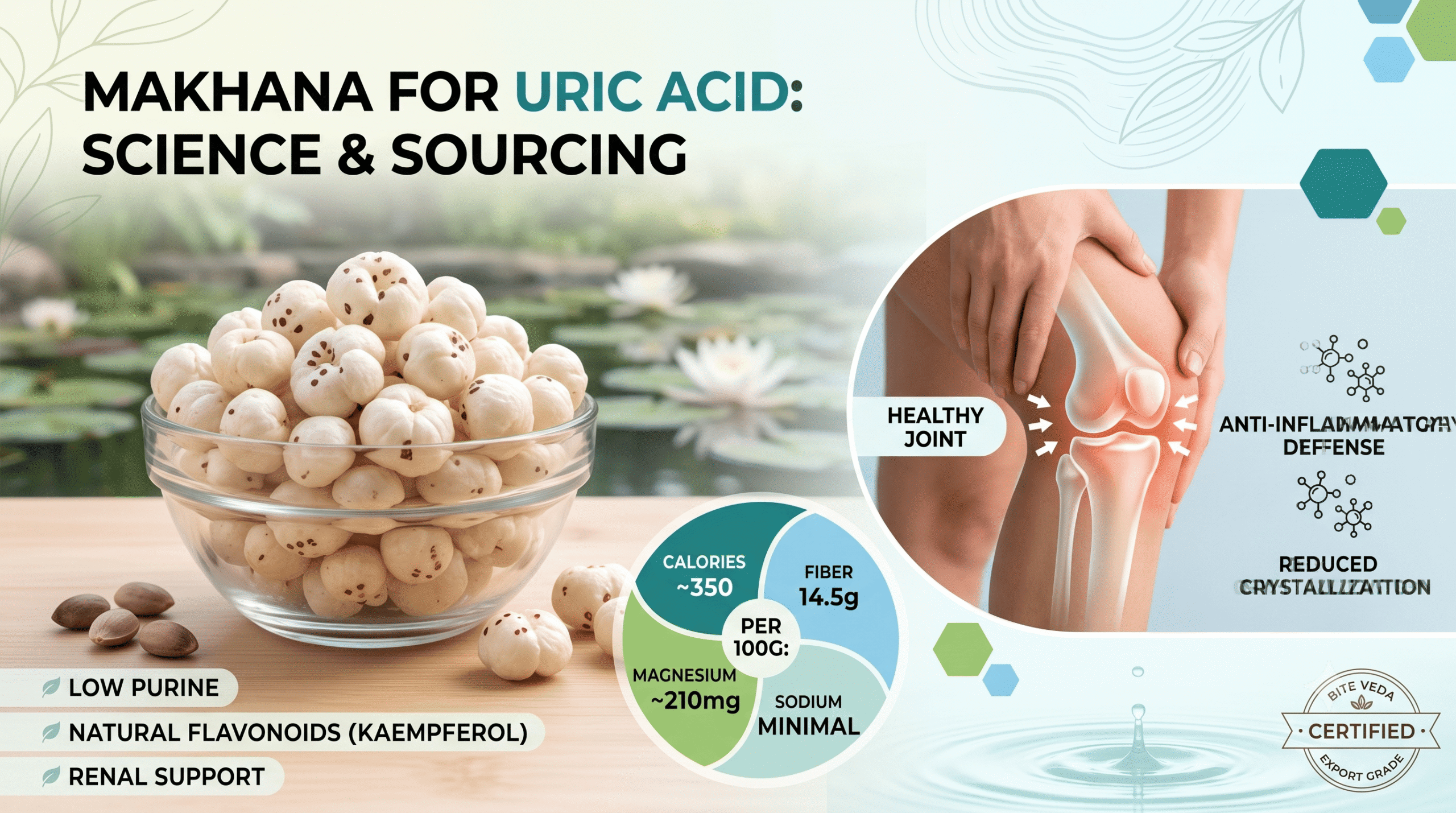
Premium fox nuts intervene in this cycle through three distinct, measurable mechanisms — not vague wellness buzzwords, but actual physiological levers.
1. A Naturally Low-Purine Food Base
Most crunchy, satisfying snack foods — certain legumes, specific seeds, processed meats — carry at least a moderate purine load, which adds to the metabolic workload your kidneys have to process. Makhana sits at the opposite end of that spectrum. It’s naturally, structurally low in purines. Swap your evening handful of mixed nuts or chips for roasted makhana, and you’ve quietly removed a variable that was working against you every single day.
2. Bio-Active Anti-Inflammatory Compounds
A gout flare isn’t just “uric acid” in the abstract — it’s an acute inflammatory event, your immune system reacting to sharp crystalline deposits scraping against sensitive joint tissue. This is where makhana’s flavonoid content, particularly kaempferol, earns its keep. These compounds have been studied for their role in dampening inflammatory signaling pathways, effectively giving your body a dietary layer of defense against the kind of systemic swelling that turns a bad day into a bad week.
3. Gentle, Natural Renal Support
Fox nuts also function as a mild natural diuretic. That’s not a throwaway line — it matters because your kidneys need adequate fluid turnover to flush metabolic waste before it has the opportunity to crystallize in the first place. Think of it as reducing the “dwell time” uric acid spends in your system, which lowers the odds it settles somewhere painful.
There’s also a broader body-composition angle worth mentioning here. People often ask me about the difference between makhana and other carbohydrates like oats or corn; the difference is that makhana keeps your stomach full without burdening your body with excess uric acid. Makhana offers a genuinely distinct metabolic advantage in this regard: it keeps insulin spikes low while still delivering the kind of clean, slow-burning fuel your body needs to stay active without weighing down your joints further.
Can You Actually Eat Makhana With High Uric Acid? Here's the Straight Answer
strip the diet down to something bland and joyless, second-guessing every single bite. So — can we eat makhana in high uric acid states without risking a flare-up?
The answer is an unambiguous yes, provided the seeds are sourced and prepared the right way.
Here’s the raw macronutrient breakdown that explains why this works at a biochemical level:
| Macro Nutrient | Per 100g (Raw Makhana) | Impact on Uric Acid |
|---|---|---|
| Purine Level | Extremely Low | Prevents crystal buildup |
| Sodium | Minimal | Protects kidney function |
| Magnesium | High (~210mg) | Improves circulation |
Look closely at that sodium figure, because it’s doing more work than people realize. High-sodium snack foods cause fluid retention, and fluid retention concentrates uric acid levels in the bloodstream rather than diluting them. Makhana, by contrast, contains almost no sodium naturally, while delivering a meaningful dose of potassium and magnesium — two minerals directly tied to healthy blood pressure regulation and efficient renal filtration.
That said, I want to be blunt about something: preparation method can make or break every single one of these benefits. Deep-frying makhana in hydrogenated oils, or coating it in artificial, MSG-heavy spice blends, doesn’t just dilute the health value — it actively works against it. Trans fats and chronic inflammation travel together, full stop. If you want the real therapeutic upside, the seeds need to be dry-roasted, or lightly finished with a heat-stable fat like pure ghee or cold-pressed olive oil. Done this way, makhana becomes a genuinely excellent example of the kind of low-calorie, filling Indian snack that translates seamlessly into a modern Western wellness routine — no cultural translation required, just good nutritional logic.
Is Fox Nut Actually Good for Uric Acid, or Is This Just Trend Hype?
I get asked this a lot, usually by clients who’ve been burned by one too many “superfood” fads. So let’s go a layer deeper than surface-level talking points, because the honest question underneath “is fox nut good for uric acid” is really: does it correct the underlying metabolic dysfunction, or does it just avoid making things worse?
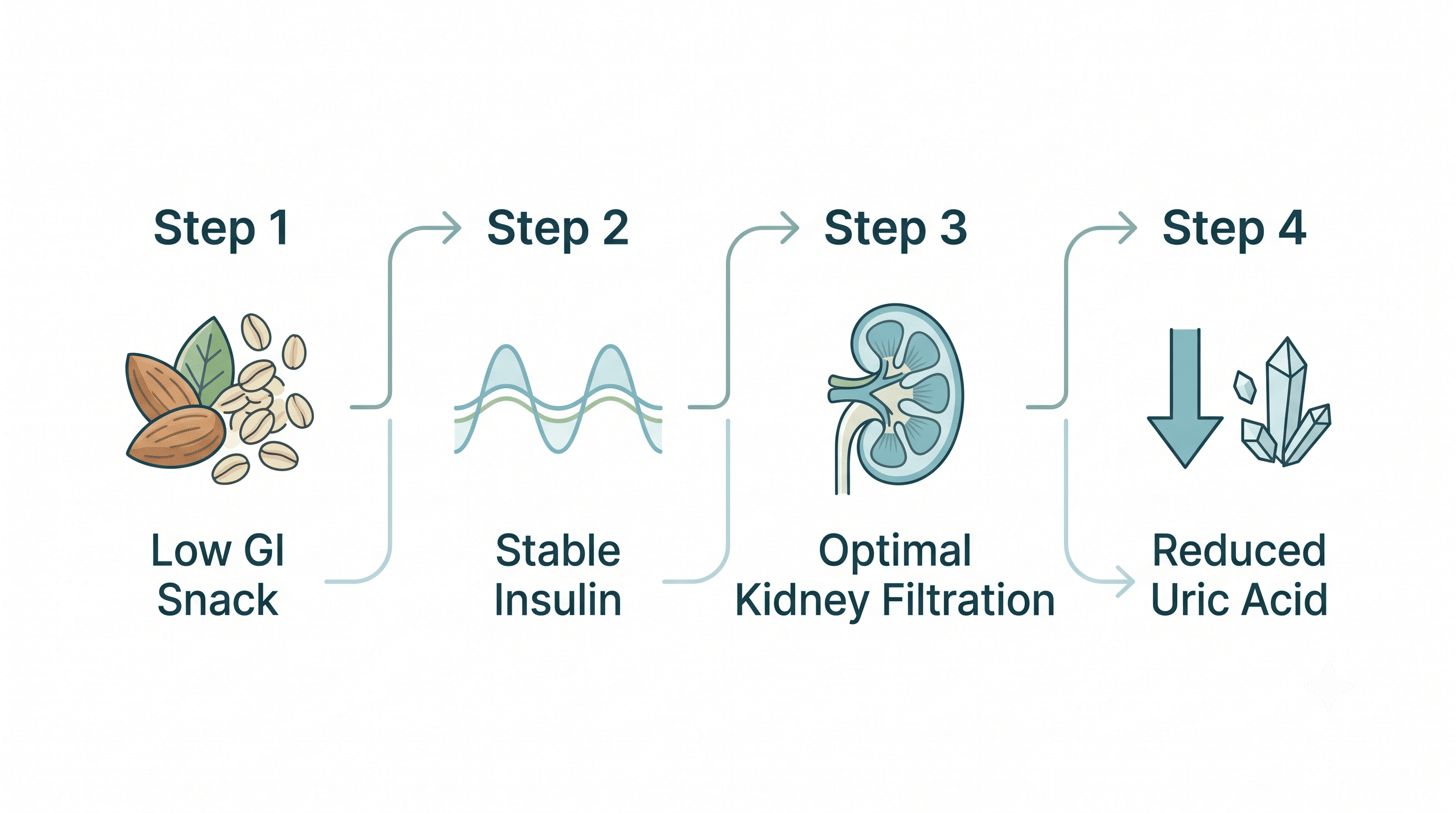
It does the former, and the mechanism runs through blood sugar regulation. There’s a well-documented, often underappreciated relationship between insulin resistance and elevated uric acid levels. When blood insulin spikes — typically from high-glycemic carbohydrates — the kidneys receive a signal to reabsorb uric acid rather than excrete it. That’s the opposite of what you want.
Makhana carries a notably low glycemic index. It digests slowly, which means it doesn’t trigger the sharp glucose spikes that ultimately compromise how efficiently your kidneys can filter waste. The chain reaction looks roughly like this:
There’s also a psychological dimension to this that I don’t think gets enough credit. Anyone who has ever tried to manage an inflammatory condition through diet knows the real enemy isn’t willpower — it’s constant, nagging hunger that eventually wins. Makhana expands dramatically when popped, which means you get a genuinely satisfying volume of food per serving. Your brain registers “I ate a full bowl,” even though the caloric and glycemic footprint is remarkably light. That’s not a minor detail; it’s often the difference between a diet that sticks and one that collapses by week three.
The Bite Veda Standard: What "Export-Quality" Actually Means in Practice
Here’s something the wellness industry doesn’t like to admit: not all makhana is remotely the same product. The global supply chain for this seed is inconsistent at best, and at worst it’s flooded with stale batches, unevenly popped kernels, or residue from unverified, unregulated farms. A bag picked up at a discount retailer and a bag processed to meet FDA, UK Food Standards Agency, or Australian border biosecurity requirements are not the same thing, even if the label looks similar.
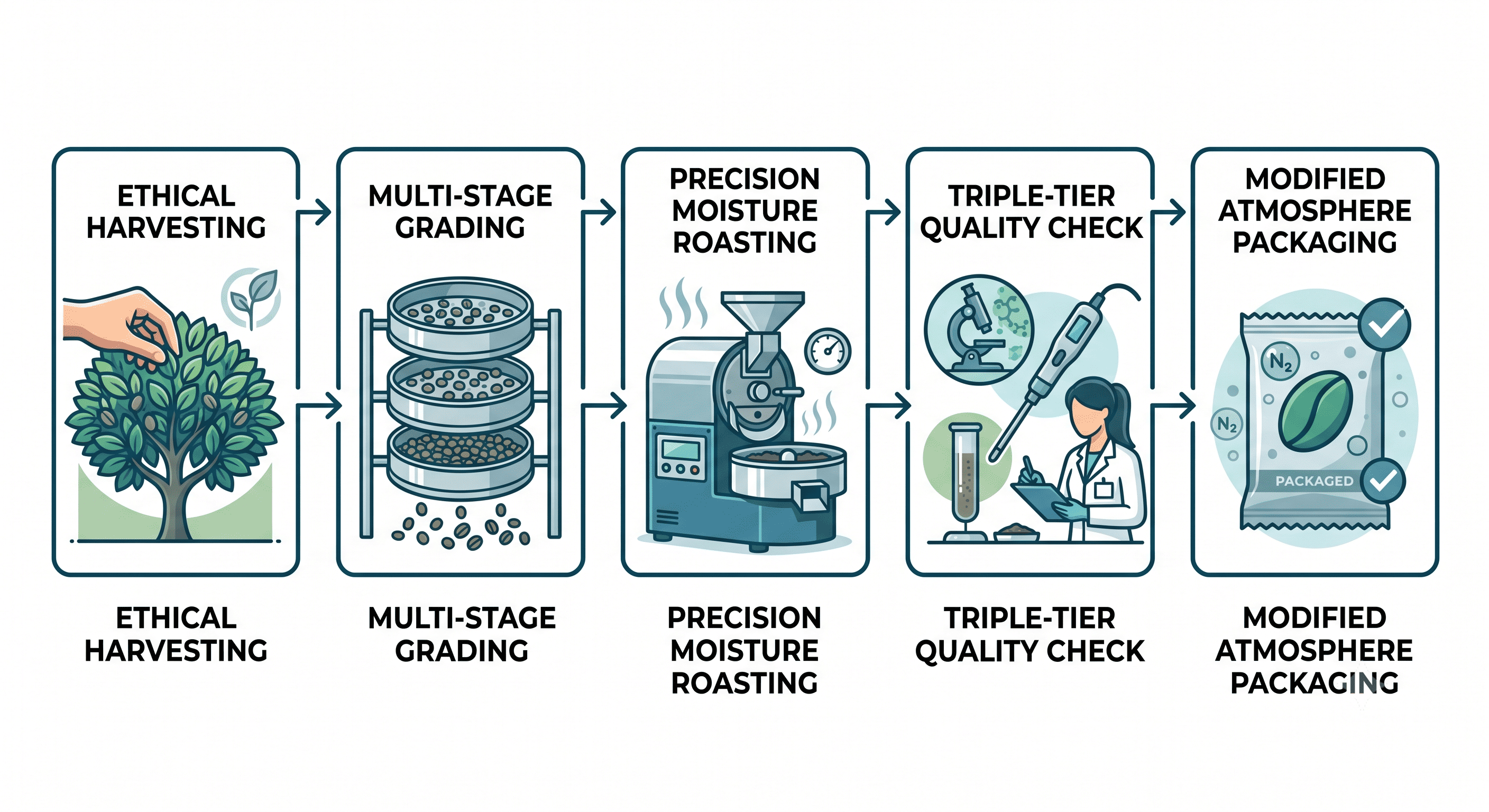
At Bite Veda, we treat makhana production less like a snack business and more like precision food engineering. The entire lifecycle, from wetland to warehouse, has been rebuilt around a single question: would this pass the strictest import scrutiny in the world, every single time?
Ethical, Source-Level Selection
Our sourcing begins in the wetland ecosystems where wild water lilies naturally flourish — the kind of environment that can’t be replicated in a factory setting. We work directly with traditional farmers who understand these aquatic systems intimately, cutting out the long chains of predatory middlemen that typically degrade both quality and farmer compensation. That direct relationship guarantees the raw seed we receive is fresh, structurally sound, and free of agricultural runoff or industrial contamination.
Multi-Stage Mechanical Grading
Uniform size isn’t a cosmetic preference — it directly affects how evenly a seed pops and roasts. We run every harvest through multi-stage grading technology to sort by size and density:
- Jumbo Grade (9mm+): Reserved exclusively for export lines. These seeds pop into a light, airy structure without leaving behind the dense, unpopped kernels that can genuinely damage your teeth if you bite down wrong.
- Optimal Density Matching: Uniform sizing means every seed in a batch receives identical heat exposure during roasting, which eliminates the bitter, charred spots that plague inconsistently graded product.
Chemical-Free Processing and Precision Roasting
A lot of conventional processing relies on bleaching agents to give makhana that stark, artificially white look consumers have come to expect. We refuse to do this. Bite Veda seeds retain their natural, off-white ivory hue — which, frankly, is the clearest visual tell that a batch was processed without shortcuts.
Our roasting facility runs on tightly controlled temperature protocols, with constant monitoring of residual moisture content. Leave too much moisture in the seed and it spoils fast, turning chewy and stale somewhere over the Pacific during a long shipping voyage. Dry it too aggressively and it crumbles into dust before it even reaches packaging. Hitting that narrow equilibrium is what locks in the signature crunch without needing a single gram of artificial preservative.
The Macronutrient Breakdown: What You're Actually Fueling Your Body With
For anyone tracking macros seriously — and I mean genuinely tracking, not eyeballing — nutritional density isn’t optional information, it’s the whole point. Deceptive serving sizes are one of the oldest tricks in packaged food, so if you’re looking up the calories in 100g roasted makhana, you deserve numbers that hold up under scrutiny.
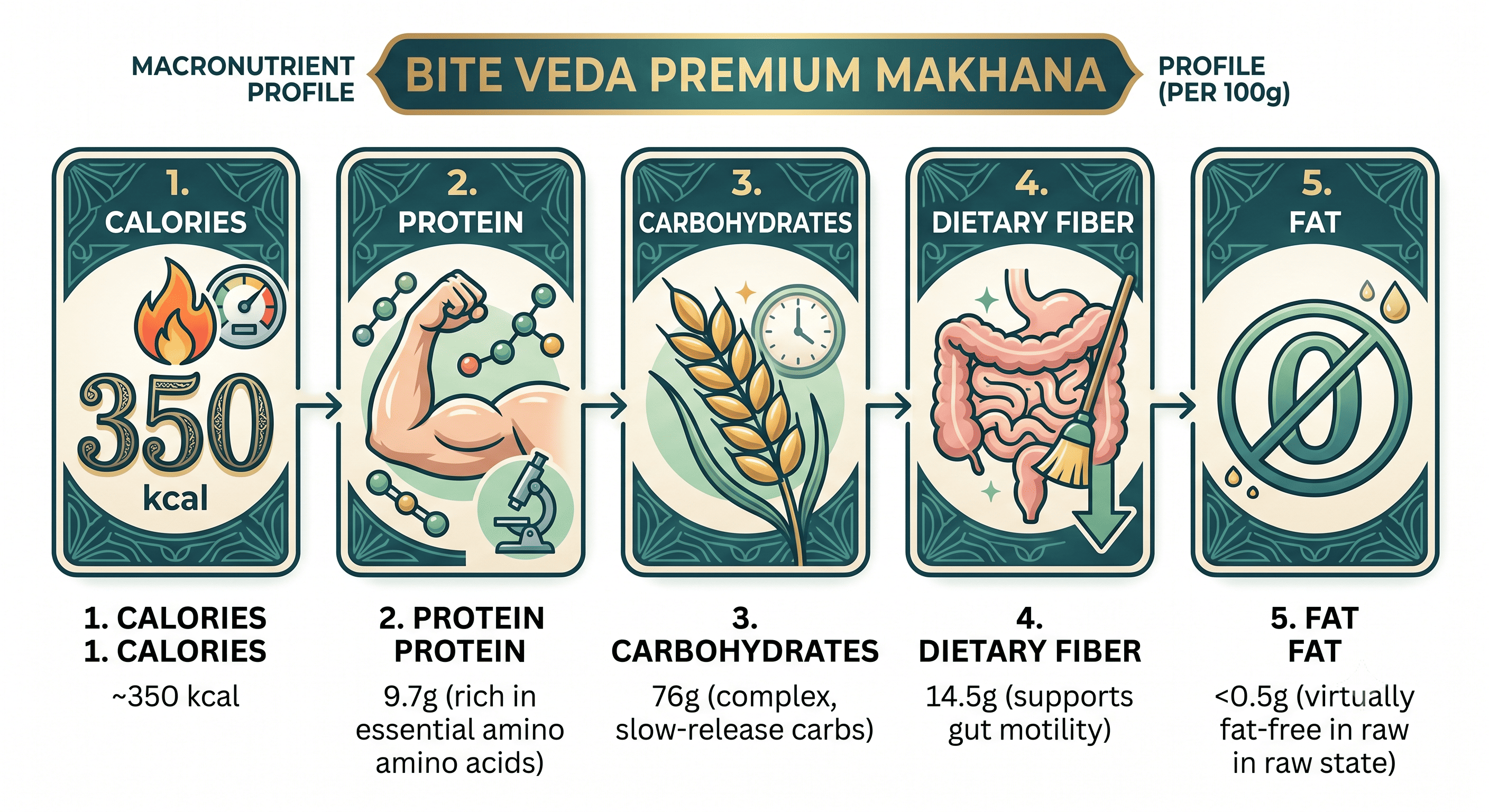
Consider what a 100-gram portion actually looks like on your plate: it fills an entire oversized bowl. Try eating an equivalent 100 grams of potato chips or roasted mixed nuts, and you’re looking at two to three times the caloric load, plus a heavy dose of the exact fats known to aggravate joint inflammation.
Because the fiber content is so substantial, gastric emptying slows down considerably, which means you stay genuinely full for hours rather than fighting off cravings by mid-afternoon. That’s the mechanism behind why this snack tends to break the cycle of poor dietary choices that so often derail people trying to manage a chronic inflammatory condition.
Practical Ways to Work Export-Quality Makhana Into a Busy Routine
Understanding the science is one thing. Actually fitting it into a demanding work schedule or a chaotic household routine is another challenge entirely. Below are three preparations I’ve tested repeatedly with clients managing joint inflammation — all quick, all genuinely enjoyable, none of them tasting like “diet food.”
The Classic Daily Wellness Roast
Take two generous handfuls of Bite Veda premium makhana. Heat a heavy-bottomed pan and add roughly half a teaspoon of organic ghee or extra virgin olive oil. Add a small pinch of pink Himalayan salt along with a dash of ground turmeric — the curcumin content gives you an additional anti-inflammatory boost on top of what the seed already provides. Toss over low heat for four to five minutes, until the seeds snap crisply between your fingers, then store in an airtight glass container for grab-and-go workday snacking.
The Power-Up Breakfast Crunch
Ditch the sugary, ultra-processed morning cereals that spike insulin first thing and set you up for uric acid retention before you’ve even left the house. Instead, lightly crush dry-roasted makhana and use it as a high-fiber topper over unsweetened Greek yogurt or a warm oatmeal bowl. Add a handful of raw almonds and a few berries, and you’ve got a genuinely balanced, low-glycemic start to the day that won’t leave you hunting for a mid-morning snack by 10 a.m.
The Evening Savory Mix
For something to unwind with after a long day, toss roasted makhana with cracked black pepper, a touch of garlic powder, and nutritional yeast. The nutritional yeast delivers a rich, cheesy flavor profile without any actual dairy involved, giving you a satisfying, savory treat that still supports your broader health goals rather than undermining them at 9 p.m.
Why Transparency Isn't a Marketing Line for Us — It's Standard Operating Procedure
Every batch of Bite Veda makhana that ships to our international partners goes through rigorous testing for heavy metals, pesticide residue, and microbial contamination before it ever leaves the facility. When you’re purchasing a product positioned as genuinely therapeutic, you deserve certainty — not a hopeful assumption — that it’s going to support your health rather than quietly undermine it.
Our packaging reflects that same standard. We use high-barrier, food-grade materials engineered to seal out moisture and oxygen, which means whether you’re opening a pack in the damp chill of a Vancouver winter or the dry summer heat of Melbourne, the seeds inside are exactly as crisp and fresh as the day they left our roasting facility.
Managing metabolic health and long-term joint comfort was never supposed to mean a life sentence of bland, restrictive eating. Once you understand the actual functional mechanics behind a food like this, you can make deliberate, informed choices rather than guesswork ones. Clean, chemical-free, genuinely export-grade makhana isn’t just another item on a superfood list — it’s a practical, sustainable tool for protecting your joints and fueling your body for the long run.
Frequently Asked Question's (FAQ's)
Q 1: Can you safely eat makhana (fox nuts) if you have high uric acid?
Answer: Absolutely. Makhana is naturally an extremely low-purine food. Because high uric acid levels and gout flare-ups are directly triggered by a diet rich in purines, swapping out high-purine snacks for fox nuts is highly beneficial. It provides a satisfying, crunchy alternative without adding to the metabolic workload of your kidneys.
Q 2: How exactly does makhana help with joint pain caused by uric acid?
Answer: Makhana contains powerful bio-active flavonoids, specifically kaempferol, which possess strong anti-inflammatory properties. When uric acid crystallizes in the joints, it triggers a severe immune reaction resulting in pain and swelling; these compounds help dampen those inflammatory pathways. Additionally, makhana acts as a mild, natural diuretic, which increases fluid turnover and helps the kidneys flush out metabolic waste before it can crystallize.
Q 3: What is the best way to prepare makhana for uric acid management?
Answer: Preparation method is critical. You must avoid deep-fried, heavily salted, or MSG-laden commercial makhana, as trans fats and high sodium actively worsen joint inflammation and fluid retention. The ideal method is to dry-roast the seeds or lightly toss them in half a teaspoon of a heat-stable fat like pure ghee or cold-pressed olive oil, finished with a pinch of turmeric and pink Himalayan salt.
Q 4: Does eating makhana daily put any extra strain on the kidneys?
Answer: No, it actually supports renal efficiency. Makhana features a highly favorable mineral profile: it is virtually sodium-free while being rich in magnesium and potassium. Low sodium prevents fluid retention—which would otherwise concentrate uric acid levels in the bloodstream—making it much easier for the kidneys to filter and excrete waste efficiently.
Q 5: What separates standard store-bought makhana from Export-Grade lines?
Answer: Standard commercial makhana often suffers from inconsistent sizing, residual moisture that leads to quick spoilage, or the use of chemical bleaching agents to make the seeds look artificially white. Export-grade makhana undergoes strict mechanical grading (such as Jumbo 9mm+ sizing) to ensure an even roast with no tooth-cracking unpopped kernels. It retains its natural ivory hue without chemical intervention and uses high-barrier packaging to lock in therapeutic nutrient density and crunch.